
'India's specific concerns about whether Russia will be a reliable defense supplier and diplomatic partner in the event of heightened hostilities with China has undoubtedly accelerated the process of US-India defense and intelligence cooperation intended to support Indian military positions along the Line of Actual Control.'

HCL Tech was the top loser in the Sensex pack, shedding over 3 per cent, followed by Infosys, Bajaj Finserv, NTPC, ICICI Bank and IndusInd Bank.
Trading volumes for the equities cash segment remained soft, even as the benchmark indices rallied nearly 9 per cent in July. Meanwhile, volumes in the futures and options (F&O) market dipped marginally, but continued to hover at record levels. In July, the average daily turnover (ADTV) for the cash segment was Rs 46,602 crore, up 4.5 per cent month-on-month (MoM), but 26 per cent lower than the preceding 12-month average.

And there have been months when flows have exceeded $3 billion.

During these eight weeks, the budget carrier will be subjected to "enhanced surveillance" by the Directorate General of Civil Aviation.

The Indian economy has recovered 'handsomely' from the pandemic-induced disruptions, former Niti Aayog vice chairman Arvind Panagariya said on Tuesday, while expressing hope that the recovery will be sustained and the growth rate of 7 to 8 per cent will be restored. Panagariya suggested that the government must now signal its intention to wind down fiscal deficit by cutting it by half-to-one percentage point in 2022-23. "The Indian economy has recovered handsomely, returning to its pre-COVID GDP... "Only private consumption is still below its pre-COVID-19 level," the eminent economist told PTI in an interview.

Despite unprecedented levels of uncertainty in Samvat 2077, investors have little to complain about on the returns front. The BSE Sensex delivered returns of 38 per cent in this period, while the Nifty registered a return of over 40 per cent. As is the case in bull markets, companies in the small- and mid-capitalisation basket outperformed the benchmarks, with returns almost twice those of frontliners.

Notwithstanding the COVID-19 second wave hitting the nation hard, Indian organisations have displayed resilience, and the salary increment is being projected to grow from an average of 8.8 per cent this year to an estimated average of 9.4 per cent in 2022, according to a survey. According to the Aon's 26th Annual Salary Increase Survey released on Tuesday, most businesses have an optimistic view going into 2022, with 98.9 per cent of companies intend to give salary increases in 2022, as compared to 97.5 per cent companies in 2021. There is positive sentiment across most sectors, and India Inc is firmly on the path to recovery, with most firms projecting salary hikes back to FY 2019 levels by FY 2022.

'Investors need to have a fairly diversified basket of funds within equities.' 'We want them to allocate to largecap funds, midcap funds and flexicap schemes.'

From Covid to climate change, Shankar Acharya's look at some of the trends and events that might shape 2022.

Members of the Monetary Policy Committee (MPC) felt that though the Indian economy was resilient in the third wave, it, however, lost some momentum and with inflation likely to soften, there is room to continue with the accommodative stance and support revival, the minutes of the MPC meeting released on Thursday revealed. The six-member MPC voted to keep the policy rate unchanged and continued with the accommodative stance at its meeting on February 10. However, external member Jayanth Verma voted against the stance because he felt a switch to neutral was long overdue and the current stance has become counterproductive and deflects focus away from addressing recessionary trends that date back to at least 2019.

Perhaps the finance ministry or NITI Aayog could take a detailed look at what governments actually deliver and at what cost; how their services can be improved and expanded where necessary; how much money can be saved through doing things differently; and how many things the government does which it can safely leave to the private sector, argues T N Ninan.

M&M was the top gainer in the Sensex pack, rallying around 6 per cent, followed by PowerGrid, Tata Steel, IndusInd Bank, Reliance Industries, HCL Tech, ONGC and Infosys. On the other hand, Bajaj Auto, Asian Paints, Sun Pharma, HDFC and Nestle India were among the laggards.

Record liquidity infusion by the central bank in the banking system during the financial year 2020-21 amid sluggish economic activity resulted in banks investing more in safe government papers than in extending loans, data from Reserve Bank of India (RBI) showed. This trend has not been seen in nearly two decades, barring 2016 - the year of demonetisation.
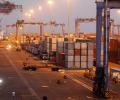
According to Ajai Sahai, director-general and CEO of Federation of Indian Export Organisations, rising cases are a cause for concern as it adds to the uncertainty and may impact exports.

TCS was the top gainer in the Sensex pack, rising over 3 per cent, followed by HUL, UltraTech Cement, Nestle India, Kotak Bank, Dr Reddy's and Titan. NSE Nifty surged 157.90 points to 17,234.15.

Holidayers, including those who would head overseas between April and June, are set to escape to the hills, beaches, and resorts in the country. This is to fend off the heat and beat the pandemic blues, indicates the initial bookings and online search trends.

Ahmed Shah Massoud's assassination, 9/11 and the defeat and ejection of the Taliban suggested a break in Afghanistan's history, but the events of August 2021 and the Taliban's return shows how deeper continuities remained in place, points out T C A Raghavan, former Indian high commissioner to Pakistan.
'The focus on easier access and faster delivery is creating a new consumption pattern that allows consumers to satisfy their last-minute cravings and restock essentials at the click of a button.'

Race Across America -- which spans a little over 3,000 miles, from the west coast of the US to its east -- is often called the toughest race in the world. Indian cyclists are now returning multiple finishes at RAAM including podium positions within age categories, discovers Shyam G Menon.

Presenting some of the coolest trends we spotted at the Lotus Make-up India Fashion Week.

'India has formed tremendous resilience and still a strong growth.'

The 6.7% growth in Index of Consumer Sentiments in July 2022 is the highest since September 2021, explains Mahesh Vyas.

Corporate India's credit quality showed a sharp improvement in the second half of FY22, but high input prices and withdrawal of pandemic-related relief measures can pose pressures in the new year, rating agencies said on Friday. Crisil Ratings, which rates a large number of financial sector entities, reported an improvement in the credit ratio -- the number of upgrades to downgrade -- to 5.04 times in the second half of this financial year, from the 2.96 per cent in the first half of the fiscal. It attributed the improvement to a sustained rebound in demand, which lifted revenues of most sectors to pre-pandemic levels and proactive relief measures by the government that cushioned the pandemic blow.

7 key areas that the Budget must address to re-energise the infrastructure sector, suggests Vinayak Chatterjee.

Equity mutual funds attracted Rs 8,898 crore in July, a 43 per cent decline compared to the preceding month as markets continued to remain volatile amid concerns over inflation and rate hike expectations. For the 17th straight month, equity mutual funds witnessed inflows in July. The net inflows in July were lower compared to Rs 15,495 crore seen in June, Rs 18,529 crore in May and Rs 15,890 crore in April, according to data released by Association of Mutual Funds in India (Amfi) on Monday.

Indian consumers are likely to get respite from rising prices just before the festival season. Some consumer companies, including automakers, have indicated that they are planning to pause price hikes just before demand picks up in August, while keeping a close eye on volatile raw material prices.

India is better positioned to face external shocks emanating from increasing geopolitical tensions, the aftermath of the COVID pandemic and the inevitability of climate change, Reserve Bank Deputy Governor Michael Debabrata Patra said on Monday. Relative to macroeconomic configurations in 2013 when India was described as one of the fragile five countries, he said, "India is better positioned currently, as its macroeconomic fundamentals have improved significantly, and external sector indicators point to the availability of enough cushions to manage external shocks." He was speaking at a conference on 'Growth And Development in the BRICS Economies' organised by the Delhi School of Economics (DSE) and the Indian Statistical Institute (ISI).

HDFC was the top gainer in the Sensex pack, spurting over 2 per cent, followed by Bajaj Finserv, M&M, NTPC, Bharti Airtel, UltraTech Cement and ONGC. NSE Nifty rose 98.35 points to 14,823.15.

Foreign Direct Investment flows to India in 2021 were 26 per cent lower, mainly because large M&A deals recorded in 2020 were not repeated, the UN trade body has said.

Macroeconomic management is usually a lot more comfortable with lower fiscal deficits. The sooner we get there, the better for the economy, says former Chief Economic Adviser to the Government of India Shankar Acharya.

Titan was the top gainer in the Sensex pack, soaring nearly 7 per cent, followed by ONGC, L&T, Kotak Bank, Axis Bank, Bajaj Finance and HDFC Bank. NSE Nifty soared 114.15 points to end at its lifetime peak of 15,690.35.

Nirmala Sitharaman is proving to be a better finance minister than her initial rookie status might have led people to expect, observes T N Ninan.

While the brand was accused of 'defacing' the Hindu festival of Diwali by naming its festive collection as Jashn-e-Riwaaz (celebration of tradition), the company insisted that it is not a Diwali collection, which will be soon launched under 'Jhilmil si Diwali' promo.

Food inflation is still very much a problem and needs fixing urgently, but the bad monsoon apparently did not make it worse.
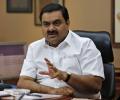
Billionaire Gautam Adani on Thursday said his logistics-to-energy conglomerate will invest $70 billion over the next decade to become the world's largest renewable energy company and produce world's cheapest hydrogen. Adani Green Energy Ltd (AGEL), the world's largest solar power developer, is targeting 45 gigawatts of renewable energy capacity by 2030 and will invest $20 billion to develop a 2 GW per year solar manufacturing capacity by 2022-23. Adani Transmission Ltd (ATL), India's largest private sector power transmission and retail distribution company, is looking to increase the share of renewable power procurement from the current 3 per cent to 30 per cent by FY 2023 and to 70 per cent by FY 2030.

JP Morgan has downgraded the Indian information technology sector to 'underweight' as it believes the heydays of the sector are over. Rising margin headwinds in the near-term and the revenue headwinds in the medium-term from a potential macro slowdown, Ankur Rudra and Bhavik Mehta of JP Morgan said in the report, will mean that the sector's earnings upgrade cycle is behind. "We see peak revenue growth behind us and earnings before interest and taxes (EBIT) margins trending down from inflation, mean revision.
The windfall taxes on domestic crude oil production and fuel exports will generate close to $12 billion (Rs 94,800 crore) for the government in the remainder of the current fiscal while trimming profits of firms such as Reliance Industries Ltd and ONGC, Moody's Investors Service said Tuesday. On July 1, the government imposed windfall gain taxes on the export of petrol, diesel and aviation turbine fuel (ATF), and on the domestic production of crude oil. It has also mandated exporters to meet the requirements of the domestic market first.

The government plans to bring down its stake to 26 per cent in these two banks, which are yet to be identified. This may not come in the way of getting investors for these banks, provided the government is willing to step back rather than run them the way it had been doing for over five decades since these banks were nationalised, points out Tamal Bandyopadhyay.

The company had launched the Yaris in May 2018 at a price range of Rs 8.75 lakh and Rs 14.07 lakh (ex-showroom), competing with the likes of Honda City, Hyundai Verna and Maruti Suzuki Ciaz. However, it didn't have a robust response in the market, clocking a cumulative wholesales of around 19,800 units.
